Supply Chain & Performance: securing flows
KEPLER designs and deploys end-to-end Supply Chain strategies, from strategic vision to operational execution.
Turning your challenges into measurables results
- The lack of a Supply Chain master plan limits your ability to support growth.
- Decisions are made locally without a global view of flows and costs.
- Logistics networks, inventory and capacities are not aligned with business ambitions.
- Customer service performance remains unstable and difficult to manage.
- Trade-offs between cost, service and cash are not structured.
- Targeted assessment: end-to-end analysis of flows, logistics networks, service levels and supply chain costs.
- Prioritized strategy: definition of a Supply Chain master plan aligned with business strategy (growth, customer service, cost optimization).
- Operational deployment: translation of the master plan into concrete action plans (network, inventory, organization, governance).
- Technology & AI: flow modeling, scenario simulation and strategic decision-support tools.
- Integrated ESG: integration of sustainability objectives into supply chain design.
- People & Change: alignment of teams around strategic priorities and operational execution.
Measured results: improved service levels, reduced supply chain costs and stronger alignment between strategy and operations.
When your Supply Chain is not aligned with your growth and resilience strategy
- Recurring shortages reduce customer satisfaction and limit business development.
- Forecasts remain unreliable and disconnected from operational realities.
- Demand peaks are poorly anticipated.
- Decisions are reactive and delayed.
- Sales, operations and finance teams lack alignment.
- Targeted assessment: analysis of demand variability, operational capacities and service performance.
- Prioritized strategy: definition of an S&OP process aligned with business priorities.
- Operational deployment: implementation of S&OP routines, structured decision-making and operational governance.
- Technology & AI: forecasting improvement through data analytics and external signal integration.
- Integrated ESG: reduction of urgent flows and transport optimization.
- People & Change: alignment of operational teams around collaborative planning practices.
Measured results: improved forecast reliability, reduced shortages and better operational responsiveness.
When disruptions and instability slow down your growth
- Inventory ties up cash without securing customer service.
- Poorly managed replenishment generates excess stock and shortages.
- Logistics costs continue to increase without clear visibility.
- Profitability by customer or channel remains unclear.
- Supply Chain is still perceived as a cost center.
- Targeted assessment: analysis of inventory, replenishment parameters, stock rotation and cost-to-serve by customer, product and channel.
- Prioritized strategy: definition of inventory policies and supply chain cost optimization levers.
- Operational deployment: replenishment optimization, parameter recalibration and working capital management.
- Technology & AI: demand forecasting, scenario simulation and supply chain financial steering tools.
- People & Change: support for operational teams in improving planning and inventory governance.
Measured results: reduced inventory levels, optimized working capital and improved profitability.
When supply chain costs and inventory reduce your profitability
- Warehouses and logistics flows struggle to absorb operational variability.
- Logistics organizations lack agility and responsiveness.
- Operational performance indicators are fragmented.
- Transport and warehouse costs increase without productivity gains.
- Operational execution is difficult to standardize and scale.
- Targeted assessment: analysis of logistics flows, warehouse operations and operational performance drivers.
- Prioritized strategy: definition of logistics transformation and operational optimization roadmaps.
- Operational deployment: warehouse optimization, transport performance improvement and operational flow redesign.
- Technology & AI: logistics automation, operational analytics and performance monitoring tools.
- Integrated ESG: reduction of transport impact and logistics footprint optimization.
- People & Change: support for operational teams in adopting new logistics practices.
Measured results: improved logistics productivity, optimized operational flows and enhanced service performance.
When your logistics operations limit performance
- Supply chains generate increasing amounts of operational data.
- Organizations still lack real-time visibility across flows and operations.
- Operational incidents are often detected too late.
- Decision-making remains fragmented across teams and functions.
- Companies struggle to coordinate end-to-end operations efficiently.
- Targeted assessment: evaluation of operational visibility, data maturity and coordination capabilities.
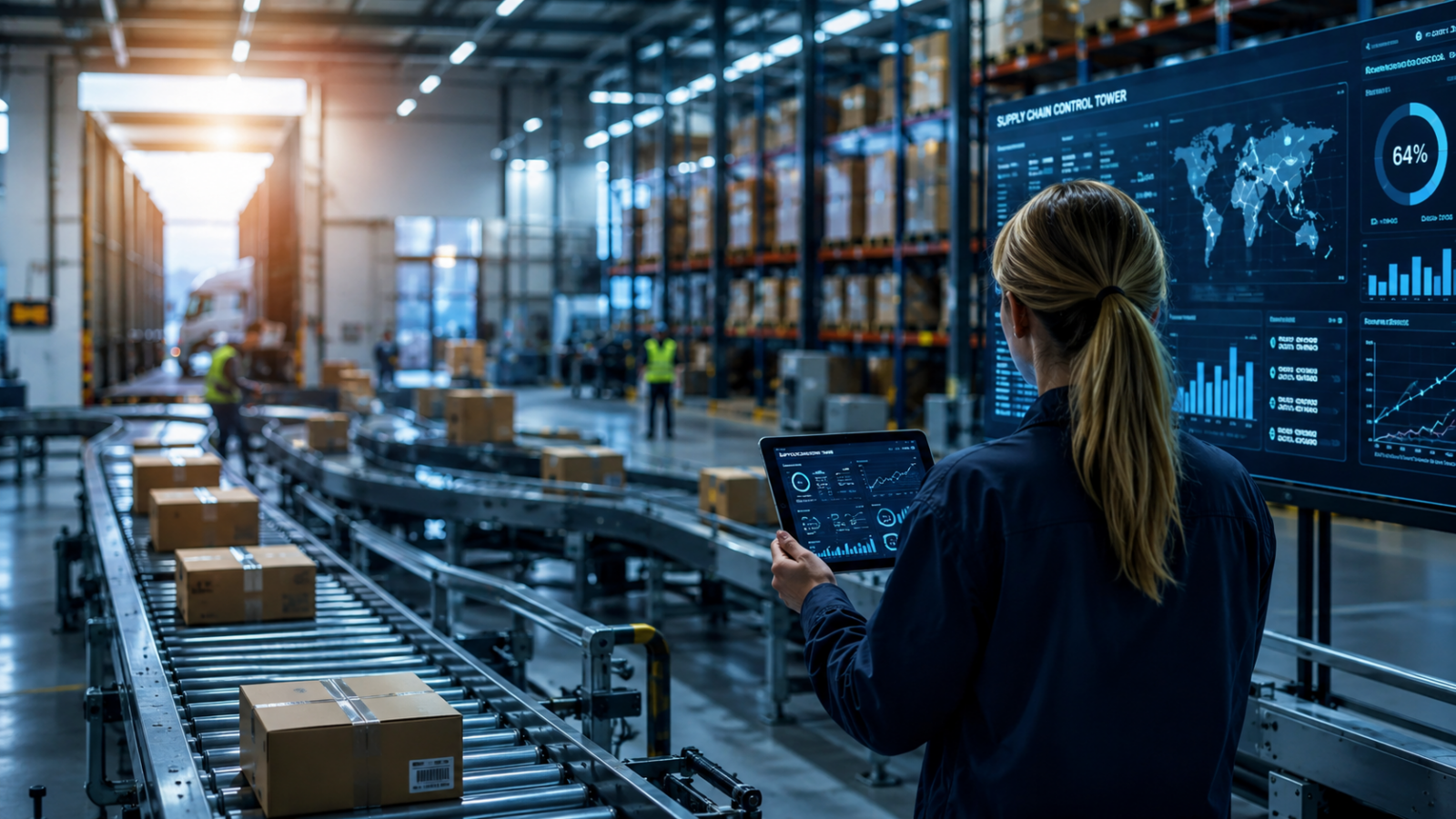
- Prioritized strategy: definition of end-to-end visibility and supply chain control tower roadmaps.
- Operational deployment: implementation of dashboards, governance routines and cross-functional coordination mechanisms.
- Technology & AI: control towers, predictive analytics and real-time monitoring solutions.
- People & Change: support for teams in adopting data-driven operational decision-making.
Measured results: improved visibility, faster operational decisions and stronger flow coordination.
When you lack visibility to manage your Supply Chain
- Environmental and regulatory requirements continue to increase.
- Costs and environmental impacts are difficult to balance.
- Supply Chain operations generate a significant share of emissions.
- Operational decisions lack end-to-end environmental visibility.
- Targeted assessment: analysis of flows, emissions and supply chain environmental impacts.
- Prioritized strategy: definition of decarbonization roadmaps and sustainable flow optimization strategies.
- Operational deployment: optimization of transportation, sourcing and packaging operations.
- Technology & AI: carbon monitoring and environmental impact simulation tools.
- Integrated ESG: sustainability embedded directly into operational decision-making.
- People & Change: mobilization of teams around sustainable transformation initiatives.
Measured results: reduced environmental footprint, improved compliance and sustainable operational performance.
When your Supply Chain must integrate ESG challenges without reducing performance
- Supply chain transformations struggle to be deployed effectively.
- Teams lack operational, data and supply chain capabilities.
- Resistance to change slows down projects.
- Processes are not consistently applied on the ground.
- Performance improvements fail to sustain over time.
- Targeted assessment: analysis of organizations, capabilities and operational practices.
- Prioritized strategy: definition of organizational models and key operational roles.
- Operational deployment: field support, training programs and governance routine implementation.
- Technology & AI: collaborative tools and operational steering solutions.
- Integrated ESG: engagement of teams in sustainable transformation initiatives.
- People & Change: support for managers and operational teams throughout transformation programs.
Measured results: accelerated adoption, improved operational execution and sustainable transformation impact.