Automotive & Mobility: Turning Industry Disruptions into Sustainable Performance
KEPLER supports OEMs, suppliers, and industry players to improve performance, procurement, supply chain, and innovation.
Turning your challenges into measurable results
-
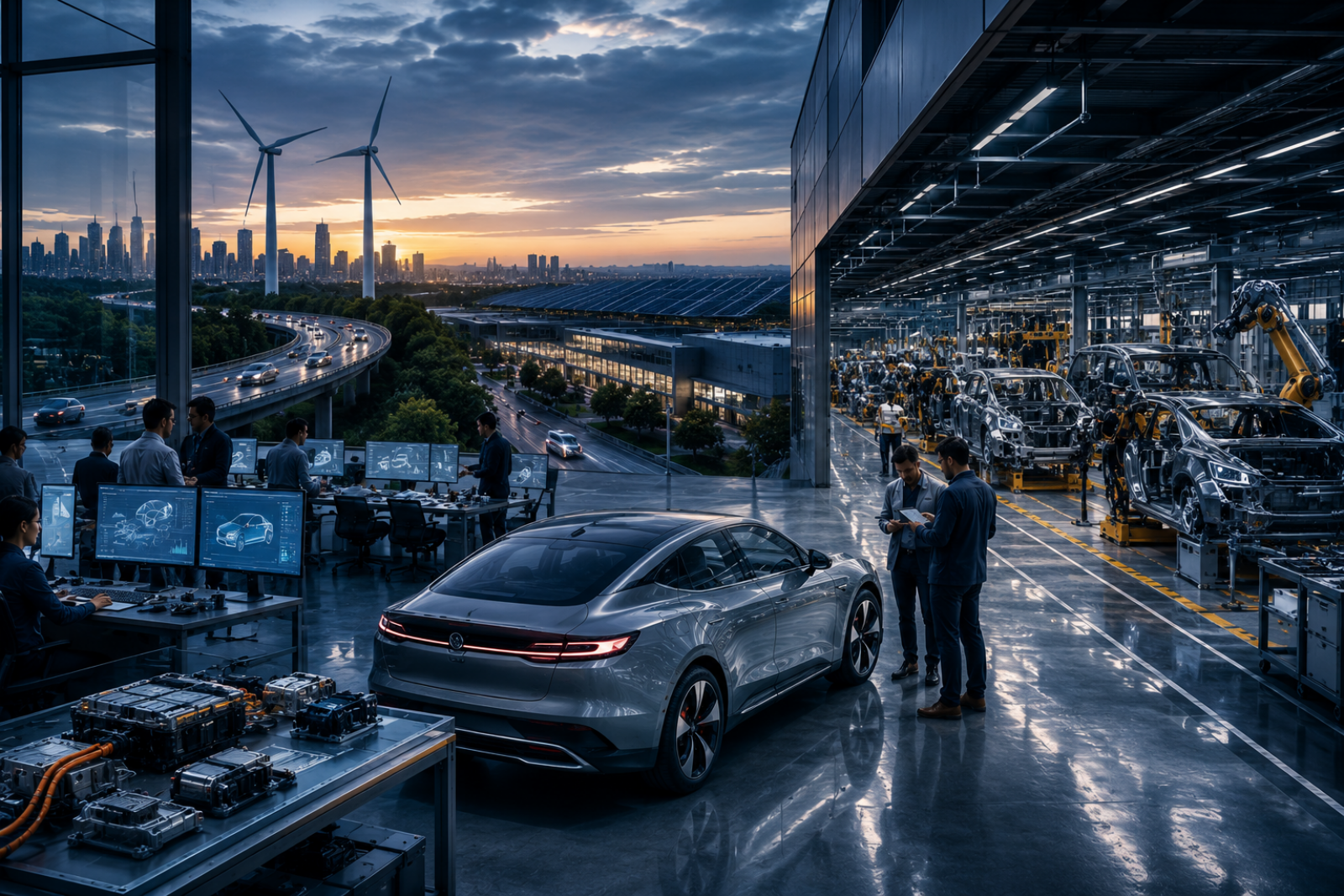
Electrification is deeply transforming vehicle architectures, value chains and historical industrial models.
-
Critical components, batteries, power electronics, embedded software and new platforms are shifting value pools and redefining supplier relationships.
-
OEMs and suppliers must arbitrate between industrial investments, make-or-buy decisions, strategic sourcing, technological control and cost competitiveness.
-
The transition to electric mobility also requires securing new supplier ecosystems, managing critical dependencies and adapting industrial organizations to faster technology cycles.
-
Targeted diagnosis: analysis of electrification-related value chains, critical components, supplier dependencies, industrial capacities and risks associated with new technologies.
-
Prioritized strategy: definition of a transformation roadmap integrating make-or-buy choices, strategic sourcing, cost competitiveness, supplier security and adaptation of the industrial model.
-
Operational deployment: support for industrial transformation plans, securing critical suppliers, optimizing component costs and adapting organizations to new vehicle architectures.
-
Technology & AI: cost analysis tools, industrial scenario modeling, technology watch, supplier benchmarking and decision-support tools for technological and economic arbitrations.
-
People & Change: support for procurement, R&D, industrialization, supply chain and operations teams in adapting skills and ways of working to electrification.
-
Measured results: secured electric value chains, improved cost competitiveness, reduced critical dependencies and faster industrial adaptation.
When electrification reshapes value chains and industrial models
-
The automotive industry is facing constant pressure on margins, sales prices, raw material costs, supplier costs and the investments required for transformation.
-
Traditional cost-reduction levers are reaching their limits in a context of increasing product complexity, volume volatility and ever-higher quality requirements.
-
Suppliers and industrial players must preserve competitiveness while financing innovation, electrification, digitalization and sustainable transition.
-
Trade-offs between cost, quality, lead time, technical performance and supplier robustness are becoming increasingly critical.
-
Targeted diagnosis: analysis of total costs, procurement spend, supplier margins, industrial costs, technical specifications and available competitiveness levers.
-
Prioritized strategy: definition of a performance roadmap integrating procurement optimization, design-to-cost, standardization, supplier panel rationalization and industrial productivity improvement.
-
Operational deployment: facilitation of cost-reduction plans, supplier renegotiation, specification optimization, reference rationalization, industrial process improvement and gain tracking.
-
Technology & AI: cost-estimation models, automated spend analysis, supplier benchmarking, negotiation scenario simulation and procurement decision-support tools.
-
People & Change: alignment of procurement, engineering, quality, finance and operations teams around competitiveness objectives and new performance management practices.
-
Measured results: reduced procurement and production costs, improved margins, secured supplier competitiveness and stronger long-term economic performance.
When cost pressure requires strengthening procurement and industrial competitiveness
-
Automotive supply chains remain exposed to supplier tensions, volume variations, component shortages, geopolitical risks and desynchronization between sites.
The complexity of flows, the multiplicity of supplier tiers and dependency on critical components weaken business continuity.
Supply chain organizations must simultaneously improve visibility, reduce inventories, secure supplies and maintain a high level of service.
The challenge is to move from a reactive supply chain to a managed, anticipatory and resilient supply chain.
-
Targeted diagnosis: analysis of flows, inventories, service levels, procurement processes, supplier risks, capacity constraints and supply chain weak points.
-
Prioritized strategy: definition of a supply chain robustness plan integrating supplier security, inventory optimization, load/capacity planning, S&OP improvement and risk management.
-
Operational deployment: implementation of robust procurement processes, optimization of inventory levels, improvement of planning, reduction of shortages and clarification of roles between central, regional and industrial site teams.
-
Technology & AI: supply chain visibility tools, supplier alerts, scenario simulation, risk forecasting, real-time flow management and automation of performance analyses.
-
People & Change: support for supply chain, procurement, production and supplier teams in adopting new processes, indicators and management routines.
-
Measured results: improved service levels, reduced shortages, optimized inventories, better visibility on supplier risks and strengthened operational continuity.
When the automotive supply chain must gain in robustness, agility, and visibility
-
Automotive innovation is accelerating under the combined effects of electrification, software, new uses, environmental requirements and competition from new entrants.
-
Development cycles are becoming shorter while industrial, quality, cost and regulatory constraints are intensifying.
-
OEMs and suppliers must improve the efficiency of their project organizations, secure arbitrations and accelerate the transition from idea to industrialization.
-
Margins can be weakened when innovation is not sufficiently managed through value, total cost and industrial feasibility.
-
Targeted diagnosis: analysis of the project portfolio, innovation processes, decision-making methods, R&D / procurement / industrialization interfaces and time-to-market bottlenecks.
-
Prioritized strategy: definition of an innovation roadmap integrating market differentiation, industrial feasibility, profitability, cost control and prioritization of highest-value projects.
-
Operational deployment: optimization of project organizations, improvement of decision-making processes, rationalization of the innovation portfolio, securing industrialization and project margin management.
-
Technology & AI: technology watch tools, innovation scenario analysis, cost / lead time / risk simulation and decision support for project arbitrations.
-
People & Change: support for R&D, project, procurement, industrialization and marketing teams in evolving collaboration models and innovation governance.
-
Measured results: accelerated time-to-market, improved project profitability, reduced industrialization risks and greater efficiency of innovation teams.
When innovation must accelerate time-to-market without damaging profitability
-
Automotive uses are shifting toward more service-based models: shared mobility, connected services, subscriptions, fleet management, predictive maintenance, mobility solutions and recurring revenues.
-
Traditional players must adapt their value proposition beyond the vehicle or component product.
-
The profitability of these new models remains complex to manage due to operating costs, life cycle costs, asset availability and customer expectations.
-
Moving from a product logic to a service logic requires new skills, organizations and management tools.
-
Targeted diagnosis: analysis of service offers, revenue models, life cycle costs, customer expectations, aftersales, maintenance, spare parts and fleet management processes.
-
Prioritized strategy: definition of a service-based strategy integrating value proposition, profitability, availability, customer experience, operational performance and recurring revenues.
-
Operational deployment: structuring of service activities, optimization of aftersales and maintenance processes, improvement of spare parts management and implementation of profitable business models.
-
Technology & AI: predictive maintenance tools, usage data analysis, asset management, intervention optimization and automation of service performance monitoring.
-
People & Change: support for sales, service, maintenance, supply chain and operations teams in evolving toward usage- and customer-value-oriented models.
-
Measured results: improved service profitability, development of recurring revenues, increased customer satisfaction and stronger differentiation in new mobility uses.
When new mobility models transform offers, services and revenues
-
Automotive players are multiplying AI experiments across procurement, supply chain, engineering, quality, production, supplier relationship management and performance management.
-
However, many use cases remain at the POC stage or fail to demonstrate clear operational ROI.
-
Data is often fragmented across sites, functions, suppliers and information systems.
-
Companies must prioritize AI use cases that deliver measurable impact on costs, lead times, quality, productivity, inventories or decision-making.
-
Targeted diagnosis: analysis of existing AI use cases, available data quality, business processes and value creation opportunities in automotive operations.
-
Prioritized strategy: definition of an ROI-driven AI roadmap, prioritizing use cases according to operational impact, feasibility, risk level and deployment speed.
-
Operational deployment: progressive integration of AI into procurement, supply chain, production, quality, engineering and performance management processes.
-
Technology & AI: cost-estimation models, AI agents, analysis automation, data structuring, decision support and management of infrastructure and consumption costs.
-
People & Change: support for business teams in adopting AI use cases, developing data skills and securing new decision-making practices.
-
Measured results: productivity gains, improved decision quality, cost reduction, faster analyses, better risk anticipation and industrialization of high-ROI AI use cases.
When AI must generate measurable ROI in automotive operations
-
The automotive industry is facing increasing requirements in terms of decarbonization, traceability, circularity, regulatory compliance and supplier responsibility.
-
Scope 3 represents a major challenge due to the weight of procurement, raw materials, components, logistics and vehicle use.
-
Companies must integrate ESG criteria directly into product, procurement, supplier, industrial and supply chain decisions.
-
Trade-offs between cost competitiveness, environmental transition, supplier robustness and compliance are becoming more complex.
-
Targeted diagnosis: mapping of Scope 3 emissions, analysis of supplier chains, identification of critical materials and components, assessment of ESG risks and main decarbonization levers.
-
Prioritized strategy: definition of an ESG and decarbonization roadmap aligned with the economic, industrial, regulatory and technological constraints of the automotive industry.
-
Operational deployment: integration of ESG criteria into procurement, supplier support, flow optimization, reduction of environmental impacts and securing of supply chains.
-
Technology & AI: carbon tracking tools, ESG data consolidation, impact simulation, decarbonization trajectory management and improved supplier traceability.
-
People & Change: support for procurement, supply chain, R&D, quality, operations and supplier teams in operationally integrating ESG challenges.
-
Measured results: reduced emissions, improved Scope 3 visibility, secured supplier chains, strengthened compliance and sustainable transformation of automotive performance.
When ESG and Scope 3 challenges complicate the transformation of the automotive value chain









Our Track Record – Automotive & Mobility