
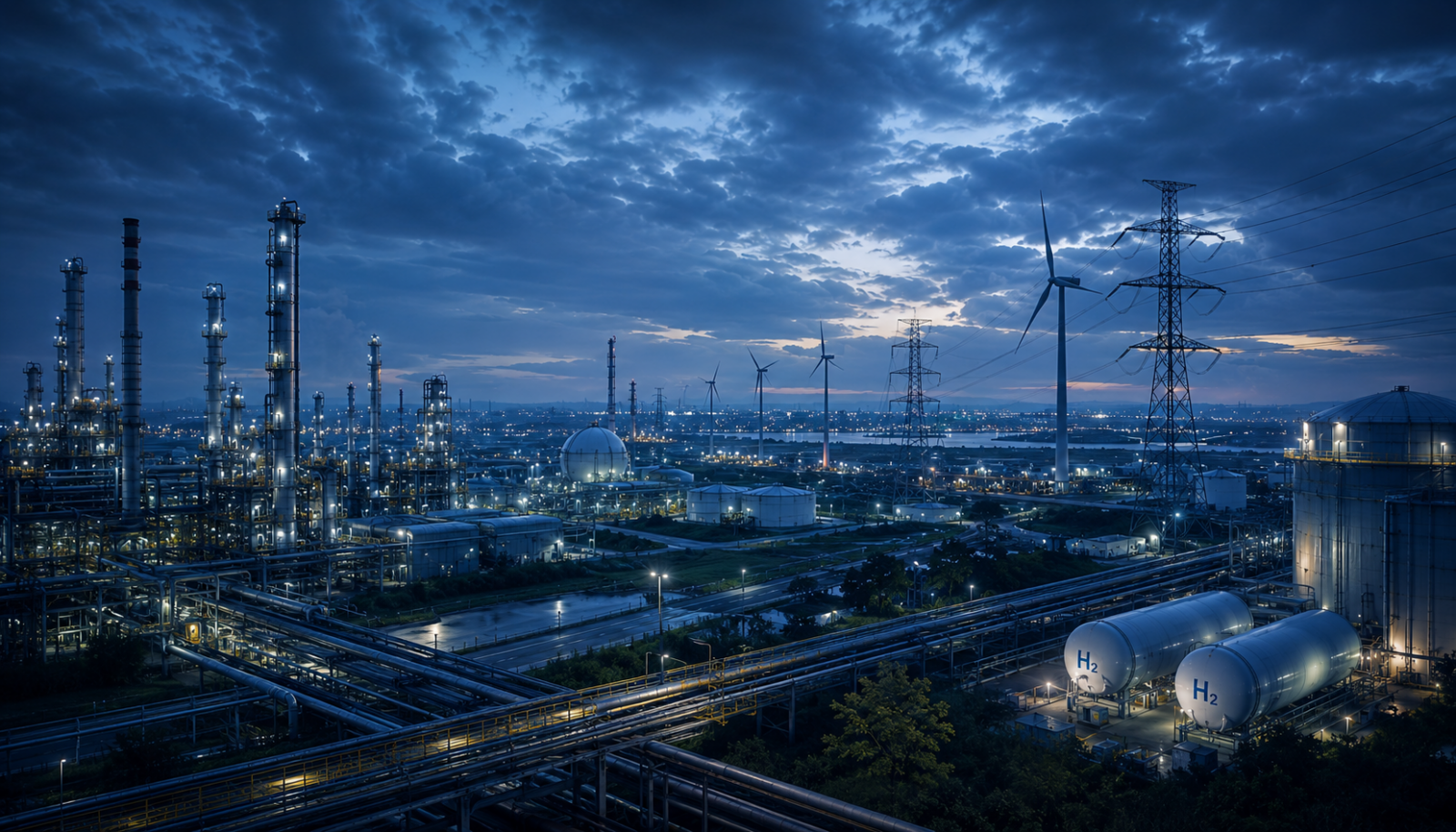
Chemicals, Energy & Utilities: securing performance
In a sector shaped by the energy transition, industrial decarbonization, and rapidly changing business models, KEPLER supports Chemicals, Energy & Utilities players in sustainably improving industrial performance, competitiveness, and resilience.
Turning your challenges into measurable results
- Decarbonization pathways are driving major transformations of industrial assets.
- The development of hydrogen, biomethane, anaerobic digestion, alternative fuels (SAF, e-fuels), and carbon capture, utilization and storage (CCUS) projects is fundamentally reshaping traditional business models.
- Trade-offs between economic competitiveness, energy security, and emissions reduction are becoming increasingly complex.
- Industrial companies must manage the coexistence of legacy assets and new energy infrastructure.
- Investment decisions commit organizations for decades in a rapidly evolving technological and regulatory environment.
- Targeted assessment: analysis of industrial assets, energy consumption, carbon emissions, regulatory constraints, and transition pathways.
- Prioritized strategy: definition of a roadmap balancing competitiveness, decarbonization, energy sovereignty, and investment security.
- Operational deployment: optimization of industrial assets, support for hydrogen, biomethane, anaerobic digestion, process electrification, energy recovery, and CCUS projects.
- Technology & AI: energy scenario simulation, economic modelling, and decision-support tools.
- People & Change: support for industrial transformation programs and development of new capabilities.
- Measured results: reduced emissions, improved energy performance, and secured strategic investments.
When energy transitions disrupt traditional industrial models
- Energy transmission and distribution networks must support the growing electrification of end uses.
- The expansion of intermittent renewable energy sources increases operational constraints.
- Energy infrastructure must absorb new flows, new uses, and new constraints while ensuring service continuity, operational safety, and network resilience.
- The investments required to modernize infrastructure continue to increase significantly.
- Targeted assessment: analysis of infrastructure, capacities, energy flows, and operational constraints.
- Prioritized strategy: definition of a modernization roadmap balancing safety, resilience, and economic performance.
- Operational deployment: network optimization, increased grid flexibility, capacity management, asset management, predictive maintenance, and smart grid modernization.
- Technology & AI: real-time monitoring, infrastructure digitalization, and intelligent maintenance solutions.
- People & Change: support for operators and asset managers as roles and capabilities evolve.
- Measured results: improved availability, reduced incidents, and optimized investment performance.
When critical infrastructure and networks must absorb new demands
- Volatility in raw materials, feedstock, and energy costs continues to impact margins.
- Dependencies on critical materials create vulnerabilities across value chains.
- Geopolitical tensions increase supply risks.
- Specialty chemicals, industrial gases, and critical materials players must secure production capabilities.
- Trade-offs between competitiveness, resilience, and industrial sovereignty are becoming increasingly complex.
- Targeted assessment: analysis of procurement, material and energy consumption, critical suppliers, inventory levels, working capital requirements, and industrial vulnerabilities.
- Prioritized strategy: definition of a competitiveness roadmap balancing cost control, supply security, and industrial resilience.
- Operational deployment: energy procurement optimization, strategic sourcing, critical material security, energy performance improvement, inventory optimization, working capital reduction, and industrial productivity enhancement.
- Technology & AI: supplier risk modelling, supply scenario simulation, and cost management solutions.
- People & Change: support for procurement, supply chain, and operations teams.
- Measured results: cost reduction, optimized inventory and working capital, improved resilience, and secured supply chains.
When industrial costs and supply constraints threaten competitiveness
- Industrial programs linked to nuclear power, gigafactories, energy infrastructure, refineries, and chemical plants are reaching unprecedented levels of complexity.
- Capital expenditures are growing significantly.
- Technical, regulatory, contractual, and operational risks continue to increase.
- Interfaces between engineering, EPC, EPCM, construction, operations, and maintenance are multiplying.
- Delays and budget overruns can significantly impact project profitability.
- Targeted assessment: analysis of governance frameworks, project risks, capabilities, and management mechanisms.
- Prioritized strategy: definition of robust governance structures and investment milestone assurance mechanisms.
- Operational deployment: PMO support, project portfolio management, CAPEX governance, stakeholder coordination, mitigation plans, and investment committee governance.
- Technology & AI: project data consolidation, scenario simulation, and portfolio management solutions.
- People & Change: support for project teams, industrial leadership, and governance bodies.
- Measured results: reduced cost and schedule overruns and improved project success rates.
When large industrial projects become increasingly complex to execute
- Requirements related to CSRD, the EU Taxonomy, and environmental regulations continue to expand.
- ICPE and Seveso facilities face increasingly demanding compliance obligations.
- Scope 1, Scope 2, and Scope 3 challenges now impact the entire value chain.
- Stakeholder expectations regarding environmental performance continue to rise.
- Industrial companies must balance compliance, competitiveness, and sustainable value creation.
- Targeted assessment: analysis of regulatory, ESG, industrial, and operational impacts.
- Prioritized strategy: definition of a roadmap balancing compliance, environmental performance, and industrial competitiveness.
- Operational deployment: ESG management, decarbonization initiatives, chemical recycling, circular economy programs, environmental performance improvement, and integration of sustainability criteria into operations.
- Technology & AI: ESG reporting, carbon management, and sustainability performance monitoring.
- People & Change: support for teams as practices, skills, and management approaches evolve.
- Measured results: improved compliance, reduced environmental footprint, and strengthened resilience of industrial business models.
When regulatory and environmental requirements redefine industry models










Contact our Chemicals, Energy & Utilities experts
Thank you for your message. Our experts will get back to you very soon.