
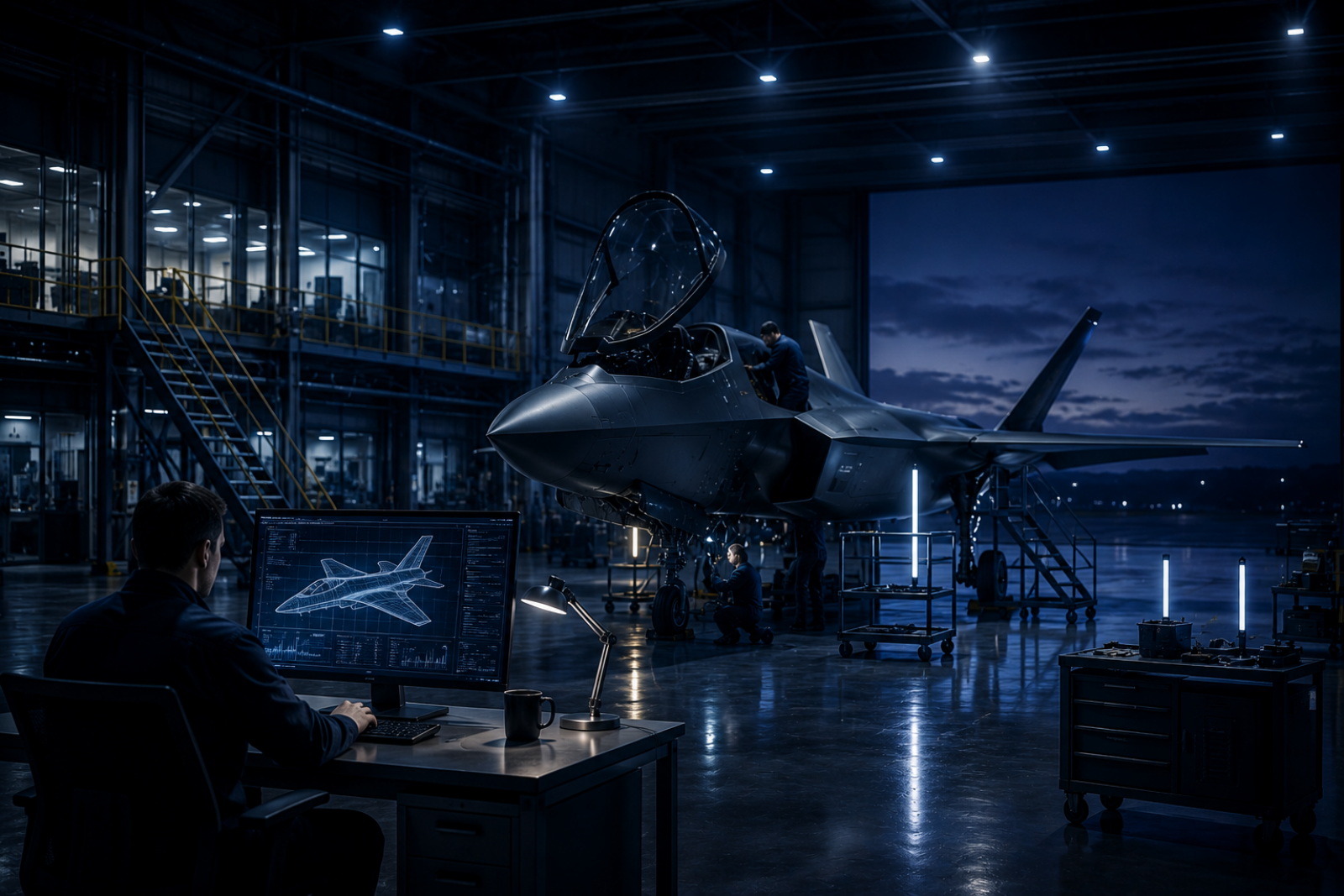
Aerospace & Defense: Securing Industrial Performance
The Aerospace & Defense sector is facing accelerating production demands, sovereignty challenges, and rapid technological transformation.
KEPLER supports Aerospace & Defense players in securing their industrial and operational performance.
KEPLER supports Aerospace & Defense players in securing their industrial and operational performance.
Turning your challenges into measurable results
- Production volumes are increasing significantly across aerospace and defense programs.
- Industrial players must rapidly scale up production capacity while maintaining quality and on-time delivery performance.
- Suppliers across multiple tiers must also secure their ability to ramp up capacity.
- Supply chain tensions and limited visibility across the ecosystem increase operational risks.
- Industrial organizations often struggle to sustain production ramp-up over time.
- Targeted assessment: analysis of industrial bottlenecks, supplier capabilities and operational constraints impacting ramp-up execution.
- Prioritized strategy: definition of industrial and sourcing strategies that enable sustainable production acceleration.
- Operational deployment: implementation of industrial performance plans, supplier development initiatives and operational governance mechanisms.
- Technology & AI: capacity simulation, production planning optimization, supplier monitoring and operational anticipation tools.
- People & Change: support for industrial, supply chain and operational teams throughout production ramp-up phases.
Measured results: secured production ramp-up, improved operational stability and strengthened industrial execution capabilities.
When production ramp-up becomes difficult to secure across the value chain
- Traditional aerospace players focused on civil aviation must rapidly develop defense-related capabilities.
- Military programs are subject to different regulations, industrial standards and operational constraints.
- Production models are often based on smaller series and more complex technological requirements.
- Emerging technologies related to drones, defense systems and protection capabilities are reshaping the industry.
- Industrial organizations must adapt quickly while maintaining operational continuity.
- Targeted assessment: evaluation of operational, industrial and organizational gaps between civil and defense activities.
- Prioritized strategy: definition of transformation roadmaps to support the development of defense capabilities.
- Operational deployment: adaptation of industrial organizations, operating models and governance frameworks to meet defense requirements.
- Technology & AI: industrial planning tools, operational simulation and performance monitoring solutions adapted to defense constraints.
- People & Change: support for teams in adapting to new operational, regulatory and industrial environments.
Measured results: accelerated operational readiness, strengthened defense capabilities and improved industrial adaptability.
When civil aerospace players must accelerate military and defense capabilities
- International tensions are reshaping industrial and supply chain strategies.
- Companies must relocate or redesign parts of their industrial footprint and supplier ecosystems.
- Dependence on certain countries or suppliers increases operational vulnerability.
- Supply chain resilience and sovereignty are becoming strategic priorities.
- Industrial organizations must secure operations while maintaining competitiveness.
- Targeted assessment: analysis of supply chain dependencies, geopolitical exposure and operational vulnerabilities.
- Prioritized strategy: definition of resilient industrial and sourcing strategies aligned with sovereignty and competitiveness objectives.
- Operational deployment: supplier diversification, industrial relocation initiatives and supply resilience programs.
- Technology & AI: supply chain visibility tools, risk anticipation systems and operational scenario modeling.
- People & Change: support for teams during industrial transformation and supply chain redesign initiatives.
Measured results: improved supply resilience, reduced operational exposure and strengthened industrial continuity.
When geopolitical tensions require supply chain relocation and resilience
- The aerospace industry faces increasing pressure to reduce its overall environmental footprint.
- The sector must accelerate innovation around materials, energy consumption and environmental impact reduction.
- Industrial transformation requires significant technological evolution across the value chain.
- Environmental objectives must be reconciled with industrial performance and operational constraints.
- Companies must innovate while maintaining competitiveness and execution capabilities.
- Targeted assessment: evaluation of environmental impacts, industrial constraints and technological transformation opportunities.
- Prioritized strategy: definition of environmental and industrial transformation roadmaps aligned with operational realities.
- Operational deployment: implementation of industrial optimization initiatives supporting environmental performance improvement.
- Technology & AI: environmental performance monitoring, industrial data analytics and operational optimization tools.
- People & Change: mobilization of teams around environmental transformation initiatives and operational evolution.
Measured results: reduced environmental footprint, improved industrial efficiency and accelerated transformation capabilities.
When reducing the environmental footprint requires technological transformation
- Preserving critical industrial and technical know-how is becoming increasingly challenging.
- The sector faces growing pressures related to talent recruitment and skills availability.
- The transfer of operational expertise between generations is becoming a strategic priority.
- Industrial transformation requires rapid workforce upskilling and capability development.
- Organizations must maintain operational excellence while adapting to new industrial realities.
- Targeted assessment: analysis of critical capabilities, operational know-how and organizational vulnerabilities.
- Prioritized strategy: definition of workforce and skills development strategies aligned with industrial transformation objectives.
- Operational deployment: implementation of knowledge transfer, operational excellence and capability-building initiatives.
- Technology & AI: digital knowledge management, operational performance monitoring and capability tracking tools.
- People & Change: support for operational teams, management and industrial leaders throughout transformation initiatives.
Measured results: strengthened operational capabilities, enhanced knowledge transfer and increased industrial resilience.
When critical industrial know-how becomes difficult to sustain and transfer

Trusted by leading Aerospace, Space & Defense companies








Contact our Aerospace, Space & Defense experts
Thank you for your message. Our experts will get back to you very soon.