Solving the Equation of Urban Logistics (a.k.a. Last Mile Logistics)
The issues of transporting goods in the city are to be solved urgently, and the solutions implemented often show their limit too quickly. Over the past ten years, initiatives in the field of warehousing, transportation and robotics have been carried out. Regulations have also been implemented. But are these provisions sufficient? We are entitled to ask.
Copied!
Last Mile? Back to a difficult start
The initiatives implemented to gain logistical efficiency in the urban environment most often only address one of the many aspects of goods transportation in the city. And as practical as they are in terms of innovation and experimentation, these initiatives generally do not bring the results (or returns on investment) to consider deploying them on a large scale (scale-up).
The challenges of the last kilometer or Last Mile in the heart of the City of tomorrow
In an urban context, marked by increasingly strong physical and environmental constraints, the stakes are considerable, in terms of economic activities, competitiveness, employment and quality of life.
The pooling of logistics flows is a lever that should improve the delivery and collection of goods in urban areas, while responding to a triple challenge:
Respond to new requirements and regulations related to Sustainable Development
Optimize Urban Development Plans by integrating current and future freight mobility needs
Develop the flow of goods in the city in an economical and qualitative way by mobilizing current resources
The beneficial and multi-factorial effects expected from an effective last-mile policy
CO2 emissions is one of the critical indicators for measuring the pooling of capacities, but it is not the only one.
Effects on transportation and logistics spaces usage rate or the satisfaction of the various stakeholders can be expected from a “Last Mile policy” that bears fruit. Here are some examples.
Freight transportation
Lowering the ratio kgCO2/tonnes or m3 transported
Contributing to achieving modal transfer from road to other means of transport (river, rail, tram, electric vehicles, NGV, etc.)
Improving truck filling
Logistics Spaces
Optimizing the ratio kgCO2/surface or m3 stored
Improving the productivity of warehouse activitiesage
Services and quality of life
Reducing nuisance including noise
Improving local services via transport
Rehabilitating local shops
Enabling sustainable growth of distribution activity in cities
In terms of customer satisfaction
For Shippers & Traders
Meeting a more ambitious service policy
Having concrete solutions to reduce the environmental footprint
Implementing actions to reduce the impacts of transport through a voluntary approach
For Logisticians & carriers
Marketing residual capacities
Reporting on actions to reduce the environmental footprint
For the Community & the Citizens
Having delivery and collection solutions that are more respectful of the environment and reduce all nuisances
Promoting virtuous behaviors in transport and logistics
Assumeing overall responsibility vis-à-vis users of urban space
When last kilometer rhymes with complexity
Urban logistics is multi-actor and highly complex. Because of the decisions to be taken in terms of development and use of “existing logistics infrastructures,” the Last Mile problem raises the question of the territory of application of urban logistics flows and the intervention capacity of the Public sector.
Beyond CO2 emissions, communities and operators must indeed take an interest in other impacts such as:
emissions of other greenhouse gases
road occupancy problems
noise
various types of pollution, particularly visual pollution
congestion
qualification and fragility of service jobs (for example, home delivery)
The response to the question of urban logistics must combine economic, environmental and societal performance, in a single whole. Decisions in the field of urban distribution should not lead to a commercial dynamism deficit and a loss of attractiveness. And this is where the challenge is.
Lysiane Bessonnet,
Director
Urban logistics, a modern challenge posed by cities
E-commerce, home delivery, or pick-up stations, along with the development of local services, translate into more goods carried around the city. And the resulting urban logistics include a large number of players, both public and private.
Even though carriers, over the past twenty years, have made progress and reduced pollutants and CO2 emissions, the cities of tomorrow will still have to make efforts to cope with their ambitions, particularly in the field of energy efficiency (buildings), socio-economic integration (jobs, diversity, harms, etc.) and the use of multi-modal transportation to support the load.
Authors
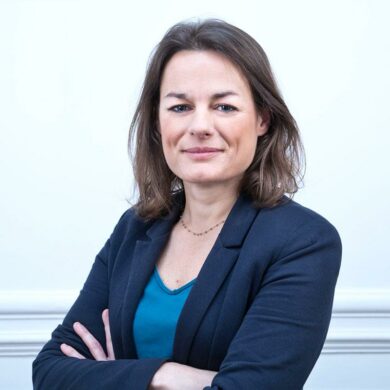
Lysiane Bessonnet
Director
Lysiane graduated from Audencia Business School, and holds a CSCP certification from APICS. She started her career in consulting as Procurement and Supply-Chain specialist. She joined…
Lysiane Bessonnet
Lysiane Bessonnet
Director
Lysiane graduated from Audencia Business School, and holds a CSCP certification from APICS. She started her career in consulting as Procurement and Supply-Chain specialist. She joined KEPLER in 2009 where she became leader of the Supply-Chain practice. She specializes in the Consumer Goods, Manufacturing and Distribution sectors.
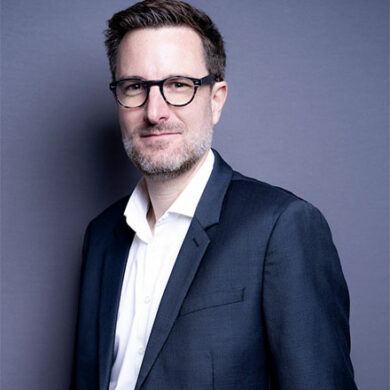
Yannig Le Roux
Director
Engineer with a degree from Mines Paris – PSL and certified CSCP by APICS, Yannig Le Roux has over 18 years’ experience in the FMCG industry, where he occupied operational…
Yannig Le Roux
Yannig Le Roux
Director
Engineer with a degree from Mines Paris – PSL and certified CSCP by APICS, Yannig Le Roux has over 18 years’ experience in the FMCG industry, where he occupied operational positions in Production, Procurement and Product Development before moving into consulting and joining KEPLER in 2019. Yannig has a 360° vision of industrial challenges, and is involved in global diagnostics and transformation plans, as well as in missions more focused on his areas of expertise.
Wishing to discuss further the Last Miles Logistics matter?